3 Tire Industry Trends Reshaping Competition in 2026 (And Why Your Payment Stack Matters)
Industry experts break down tire consolidation, pricing pressure, and why payments matter.

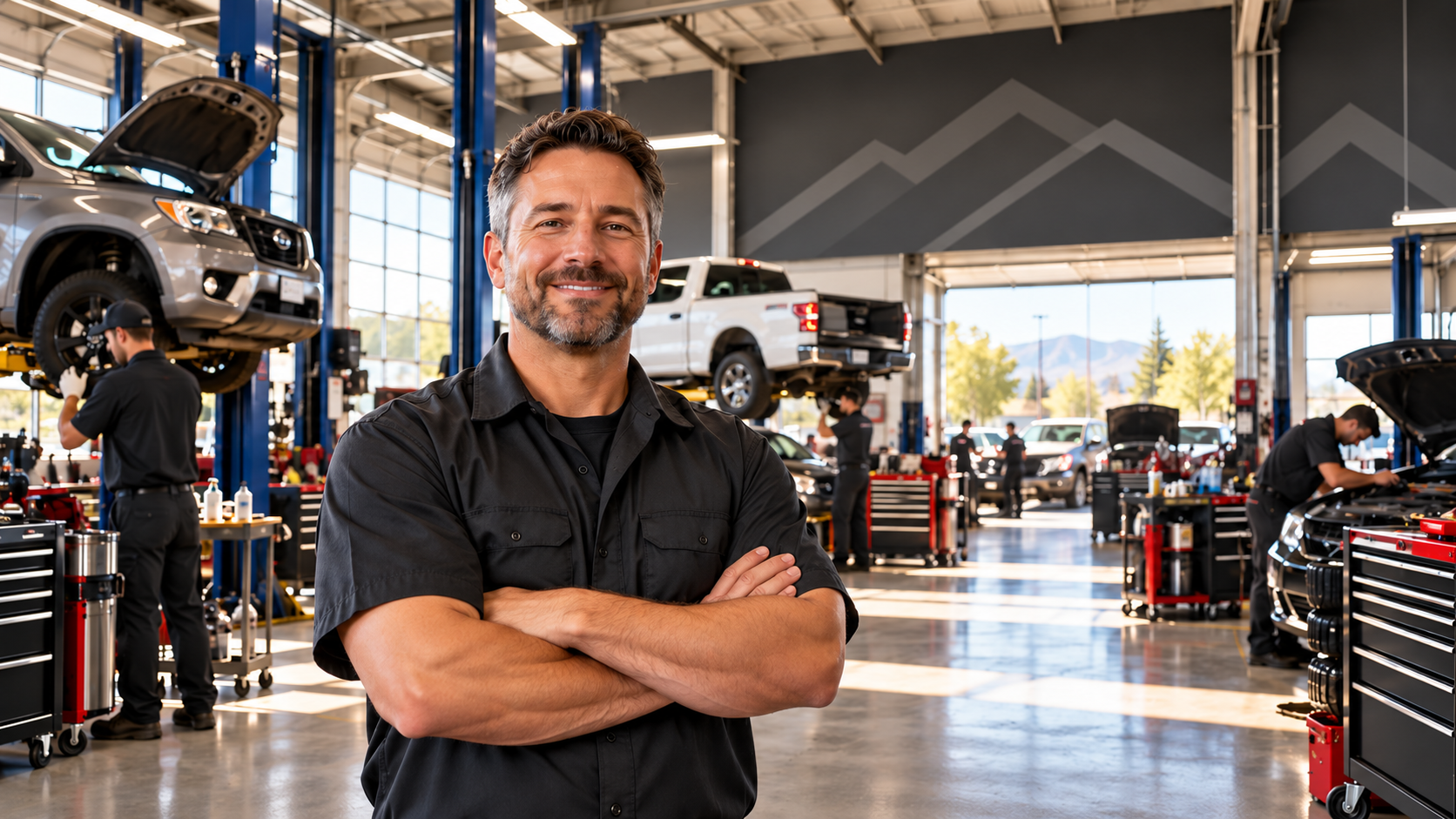
The auto repair industry is changing, and for many independent shop owners, acquisitions are becoming a bigger part of the conversation. Whether you're considering a second location, expanding into a new market, or starting to think about an eventual exit, understanding what actually makes a shop valuable is worth doing early.
In this episode of The Full 360 Podcast, host Doug sits down with Brandon Harrow, owner of Wilmington Tire & Auto, to talk through what he's learned growing a family-owned shop into a multi-location operation.
Brandon covers how he finds acquisition opportunities before they're listed, what he actually looks for in a shop, the mistakes he's seen other buyers make, and why the team matters as much as the numbers.
In this recap, we'll cover:
If you're looking to buy another shop, where do you actually start?
According to Brandon, it's not browsing listings. It's building relationships.
His strategy centers on networking with other shop owners, staying close to industry partners, and building trust long before a seller is ready to exit. Industry vendors are particularly useful here. They know the market and have relationships across it, so letting trusted partners know you're interested in expanding can surface opportunities that never make it to a public listing.
By the time a business is formally listed, other buyers are usually already looking at it.
The takeaway: don't wait until you're ready to buy to start building your network. The relationships you build now are what lead to the next opportunity.
When Brandon evaluates a potential acquisition, reputation is one of the first things he checks. Google reviews, customer feedback, and local visibility say a lot about how a business actually operates and the trust it's built in its community.
A shop with hundreds of positive reviews and a loyal customer base has something that takes years to build: real customer relationships.
But reputation alone isn't enough. A shop can have excellent reviews and still struggle to turn a profit, especially if that reputation was built on being the cheapest option in town.
For owners thinking about a future sale, the lesson is straightforward: build a reputation around service and consistency, not just price, and keep the business profitable while you do it.
A great location helps, but it's only part of the picture.
Brandon treats car count as one of the most important factors his team evaluates. Pricing, staffing, marketing, and technology can all be improved after the fact. Consistent customer traffic takes much longer to build.
He also looks at the number of service bays, surrounding demographics, and the real estate tied to the acquisition. His company generally targets shops with at least six bays, though that threshold shifts depending on the market.
The lesson isn't that every shop needs six bays. It's that buyers need to know their own operating model well enough to judge whether a given shop actually fits it. A small shop in a dense market is a different opportunity than a larger facility in the suburbs, and the right buyer for one isn't necessarily the right buyer for the other.
High car counts and strong reviews don't automatically mean a shop is financially healthy.
Being profitable isn't something to apologize for, as Brandon points out. A business built around being the lowest-priced option might attract volume, but that volume doesn't automatically translate into a sustainable operation.
Buyers need to understand not just how many vehicles a shop services, but whether the business turns that volume into real margin. For sellers, clean financial records and healthy margins make it far easier for a buyer to understand what the business is actually worth.
Growing from one location to several takes more than buying buildings and equipment. It takes people who can run the business without the owner managing every detail.
One of Brandon's biggest lessons has been hiring ahead of growth: investing in leadership, recruiting, and operational support before the business urgently needs it, rather than waiting until it does.
How much the existing team matters depends on the buyer. For someone acquiring their second or third location, keeping the shop's technicians, advisors, and managers is often critical. A larger multi-location operator may have more recruiting resources to backfill a new location if needed.
Either way, communication is the common thread. Brandon describes an acquisition where employees found out about the ownership change earlier than planned, with no new leadership on hand to answer questions. The uncertainty that created contributed directly to turnover. Change management isn't a side task in an acquisition. It's part of the deal.
Brandon's team starts integration immediately after a purchase, rather than letting a new location run on different systems for months. That includes shop management software, digital vehicle inspections, phone systems, and other core processes.
The reasoning: waiting makes the change harder, not easier. If employees spend months operating exactly as they did before the sale, introducing new systems later just means a second disruption instead of one.
That doesn't mean it's simple. Brandon describes acquiring a shop running roughly 1,000 vehicles a month on paper tickets. A strong business with a good team, but the move to digital systems still required real training and support.
Successful integration isn't just installing new software. It's clear processes, trained employees, ongoing support, and patience while the team adapts. And for owners thinking about a future sale, established technology and organized records make the business easier for a buyer to evaluate later.
The biggest message from the episode: don't wait until you're ready to retire to start preparing your business to be sold.
Clean financials, reliable management, established processes, and consistent profitability all help a buyer evaluate the opportunity. Brandon also stresses making the business less dependent on the owner personally. If every decision, customer relationship, and daily process runs through you, a buyer isn't just purchasing a business. They're trying to replace you.
A strong leadership team and repeatable processes build something that can actually run without you, which is what makes it sellable in the first place.
Sellers should run their own diligence on buyers too. Confirm the buyer has the financial resources to close, and work with an attorney who has real experience in business acquisitions, not just general business law.
Whether you plan to sell next year or in ten years, running the shop as though it could eventually be sold tends to make it a stronger business today, sale or no sale.
Asked for the single most important takeaway, Brandon's answer was simple: know your numbers.
Understand your financials. Know what's happening across the business. Keep the books clean. Build an operation that doesn't depend entirely on you to function.
There's a real difference between owning a business and owning a job. A shop that runs well without the owner handling every daily decision is better positioned for growth, for ownership transitions, and for a sale when the time comes, whether that's next year or a decade out.
Brandon's team didn't treat payment processing as an afterthought during integration. It was part of the same push toward consistent systems across every location, alongside shop management software and digital inspections.
That's worth noting because disconnected payment processes are exactly the kind of thing that makes a shop harder to evaluate and harder to integrate after a sale. Manual reconciliation, inconsistent surcharging practices, and processors that don't talk to your shop management software all create friction, whether you're trying to scale, trying to sell, or just trying to run a cleaner operation today.
360 Payments works with independent auto repair and tire shops on exactly this kind of consistency: integrated payments, Text-to-Pay, consumer financing, and surcharging built to work with the systems shops already run on.
Hear Brandon's full conversation with Doug, including more detail on finding acquisition targets, evaluating potential shops, and managing the transition after a sale.
🎧 Watch The Full 360 Podcast: The Inside Scoop of Acquiring a Shop
https://youtu.be/CCkRvB_99u0
Catch up on other episodes of The Full 360 Podcast [LINK: podcast hub], or subscribe [LINK: subscribe page] to get new episodes as they drop.
How is an auto repair shop valued?
There's no single factor that determines value. Brandon weighs profitability, real estate, customer volume, service capacity, location, reputation, and number of locations. The broader acquisition market also affects what buyers are willing to pay at any given time.
What do buyers look for when acquiring an auto repair shop?
Reputation, Google reviews, location, demographics, car count, real estate, number of service bays, profitability, and the existing team are the core factors Brandon considers. Different buyers weigh these differently depending on their operating model.
What should I do before buying a second auto repair shop?
Define the type of shop that fits your operating model. Build relationships with other owners and industry partners. Understand your available capital. Evaluate reputation, customer volume, real estate, and financials. Make sure you have the team and infrastructure to support another location.
How long before selling should I start preparing my shop?
Ideally, years before you plan to sell. Clean financials, reliable management, consistent profitability, and repeatable processes all take time to build. Running the business as though it could eventually be sold tends to make it stronger regardless of when, or if, you actually sell.
Industry experts break down tire consolidation, pricing pressure, and why payments matter.

360 Payments is exhibiting at the 2026 Tire Pros National Dealer Conference, Sept 25–28 in Orlando.

See 360 Payments at ASTA Expo 2026! Booth 318, Sept 24–26, Raleigh, NC